So, we have been using Shaklee’s Get Clean line of non toxic cleaner concentrates for more than 16 years now. While that seems like a somewhat significant number to me, in reality, there are more years than that in which we used a variety of conventional cleaners. If even umbilical cord blood is testing for “forever chemicals,” it is safe to say that we have these chemicals too. Our bodies are amazing, but we are systematically poisoning our bodies with toxic chemicals when we go to the store or out to eat at a restaurant. Hopefully the trend will change, but it isn’t going to change as long as we remain indifferent to minimizing our exposure to toxic chemicals. Starting at home is the best place to start because at home, we are in control of our purchasing power and also, it is worth taking the time to care because hopefully we spend a significant amount of time at home, even if it is mainly to wind down after work away from home and to sleep.
I’ve watched health talks over the years and one slide that I saved really hit home as to why it is so important to pay attention to what cleaners we use. It states that “detergents enter your bloodstream in just 90 seconds.” If we let that sink in, we can understand why it is important to use laundry products that are not toxic. If you pay attention to the names of the Shaklee “Get Clean” line, you will realize that they don’t use the term “detergent” because they do not have detergents. Instead they use “powder” or “concentrate.” Clothing touches our skin almost every moment of our life. Bedding comes into direct contact with any skin not touching our clothing. Therefore, as we sleep, we could potentially be bathing in toxic chemical residue allowing it into our bloodstream, even after 90 seconds of getting into bed to “rest and repair” for the night. In addition, children that have an ear infection could potentially make matters worse by laying their ear on their pillow 8-9 hours a night. Add to this, the chemical residue left on our plates and drinking glasses and utensils every time we wash our dishes unless we avoid toxic detergents. Thinking about how we mop our floor is another area that we probably don’t even realize is a serious undertaking when we walk barefoot in our homes or when our littles one do. That same slide that I was talking about says that it “only takes 26 seconds for the cleaning chemicals on your floor to enter your child’s bloodstream through their feet.”

So, now I want to share the information from a document that puts together several common cleaning chemicals and lists products that chemical has been found in. Now, mind you, the document is several years old, and I have not looked at every single product listed to see if any formulations of products have removed the problematic chemical, but there is a website that lists products that have a particular chemical, so rather than say what my somewhat outdated document lists, I will simply give a link to the chemical page on the resource website. I would have to say that you have to take the website’s determination of severity of concern (SVHC stands for Substance of Very High Concern). For instance, I looked up Sulfamic Acid on the website here. It lists 80 brands that use it and my document says this about it:
Toxic to lungs and mucous membranes
Direct skin contact is corrosive
Causes skin irritation
Inhalation causes irritation to Gastro Intestinal Tract
However, the website says that it is not a Substance of Very High Concern. So essentially that means it isn’t in the “worst” classification. However, doing a search, I found a website from New Jersey that says the New Jersey Department of Health rates Sulfamic Acid as a 3 out of 4 in terms of health and a 3 indicates a serious threat, although not a severe threat. Now, I don’t know about you, but I’m not interested in just avoiding “severe” threats. A “serious” threat is still something I want to keep out of my house if I can.

Another Chemical listed in my document is Monoethanolamine or MEA. It said to be linked to Asthma. So, if you or your children deal with Asthma, you will want to pay particular attention to the products that use this chemical. Unfortunately at the time that I originally wrote this entry the “What is in Products” website was being worked on, so many of the pages were not available. I am now updating this post to include links showing current products listen on the “What is in Products” website. Here is the Link for MEA. Many Lysol and 409 products are listed as well as Tide, All, Cheer, Arm & Hammer Laundry and Power Dawn products, and oven cleaners.
Hydrochloric Acid is another chemical listed. It causes:
Severe damage to skin and eyes
Throat irritation even when exposed briefly and at low levels
Linked to reactive airways dysfunction syndrome (sounds a bit like asthma)
And at the time of writing, products listed as having Hydrochloric Acid were Lysol Toilet Bowl Cleaner, Lime-a-way Bowl Cleaner, and Febreze Laundry Odor Eliminator. There are way more. Take a look at this link.
Another chemical noted in my document is Butyl Cellosolve. These are the issues with Butyl Cellosolve:
Linked to reproductive harm
Can cause irritation and tissue damage from inhalation
Exposure for 15 minutes while cleaning shower, could inhale 3X the acute exposure
Exposure through the skin
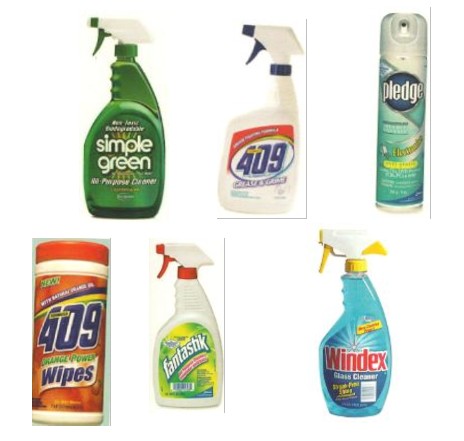
Products listed on my document were: Spot Shot Carpet Cleaner, Simple Green Cleaner/degreaser, Glass Plus, Fantastik lemon scent cleaner, 409 wipes and all purpose cleaner, Fantastik Oven Cleaner, Orange Glo spot remover, and Pledge Electronics. It seems that name is not being used by the “What is in Products” website at this time of update, but a google search did show that it is also called: 2-Butoxyethanol and I linked what came up under that name, but I also found on Wikipedia that there are about 11 different synonyms for 2- Butoxyethanol, so either some of the above products have removed it or there may be more products still using it, but under a different name.
Sodium Hydroxide is another hazardous chemical in my document. It is listed on the Minnesota Toxic Free Kids list of Chemicals of High Concern. In fact, there are 175 pages (with about 10 chemicals per page) to the list on the “What is in Products” website. The negative issues with Sodium Hydroxide are:
Causes 75% of all caustic injury to the esophagus of kids under 5 years old
Can cause burns in tissues
can cause chronic skin irritation
Can cause irritation to the respiratory tract
Can cause liver & kidney damage
Sodium Hydroxide is found in quite a few items including Chlorox cleaners (including their “Green Works” commercial all purpose cleaner), Lysol cleaners, SOS steel wool pads, Arm & Hammer Oxiclean products, Brisk Laundry products, and Disinfectants. See the up to date products here.
And the other Chemical listed is Lye or Potassium Hydroxide which can be:
Harmful if swallowed or inhaled
Can cause severe eye and skin burns
Can cause severe respiratory & digestive burns
It is listed here as being found in Berkley Green Baby Stain Remover, Amway laundry detergents, Easy Off oven cleaner, WD-40 degreaser, Ortho Weed Killers, Simple Green Granite and Stone Cleaner and Floor Care, Dirty Labs, Bio Laundry Detergent, Free & Clear, as well as Bar Keepers Stainless Steel Cleaner, among others.
Repeated Skin Contact may cause dermatitis (Eczema)
Avoiding toxins is really something serious to take into consideration. No, we cannot avoid all toxic chemicals but making our homes a safe haven from the toxic elements out in the world should be a priority if we want to avoid cancer or a host of other chronic diseases. Usually when I am around toxic cleaners, my tongue starts to tingle. I completely avoid the cleaner aisle by using Shaklee for my cleaning needs…and I hold breath as I walk by (I would instinctively do this even before I put any thought into why I instinctively did not want to breath in or near that aisle…add to this the realization that these are closed bottles). There is not just the adverse physical effects of these cleaners, but it has been observed that some children become very problematic in their behavior by exposure toxic chemicals. I watched a documentary about that topic once. I’ve tried finding it online again, but still haven’t. However, if we want those we love to have the best chances in life, we would do well to clean our homes with non toxic cleaners. Shaklee’s Get Clean line was the first brand I tried (because my Mom had introduced me to Basic H when I was growing up and gave me a bottle as a wedding shower gift. However, I was far from understanding what made it so great other than it worked and was economical. In fact, I don’t think a 16 oz bottle isn’t over $13 and it only takes 1-2 drops of Basic H2 in 16 oz of water to make window cleaner. This is pennies per bottle. You can actually make over 5,000 bottles of window cleaner from one 16 oz concentrate bottle of basic H2. There is no reason to use Windex and expose yourself and those around you to this toxic soup called window cleaner. Dr Shaklee didn’t believe in shipping water because he said the consumer had it readily available. Therefore, he only developed concentrates. For this reason, the Get Clean products are actually very economical because you don’t have to use a lot. I have put together a cart of the Basic Get Clean items on our website to help someone get started detoxifying their homes of toxic cleaners. Shaklee does have a Get Clean Kit and it comes with a nice caddy and some cloths, but if you are on a budget, just get started with the items in the cart that I put together.
We just got rid of our toxic cleaners and I’m glad we did. However, its been so long ago, I don’t remember what we did. We only had to do it once. But unfortunately there is no really good place to put these toxic products. Where we currently live I think there is a city service that will take certain toxic household items. Obviously dumping it in the ground doesn’t seem very safe, but neither is it safe to systematically dump it, in regular doses, into our bloodstream. Most of these cleaners are literally poison to our bodies. And before the chemical product website stopped working, I saw one supposedly “green” product that had 3 “chemicals of concern.” I ask myself, “Is that really a green, ‘eco’ cleaner?” So don’t be fooled by fancy labels that make it seem like something is a better product. Some companies don’t mind mis advertising on their labels and just paying the fines for doing so if they get caught.
 Living Nourished Lives
Leave a comment